Hello racing fans!
I spent lunch watching the USTA meetings today. Two items they were voting on were the budgets ($120,000) for television and $250,000 for the reputation management, digital marketing and outreach program that has been going on for a few years.
In the end both things passed, which is probably a good thing.
As a sport, harness racing has been left behind badly in this vein. The Thoroughbreds have the NTRA, the Jockey Club and the Breeders Cup with dedicated budgets doing those things. The spend is in, or near the tens of millions. Individual racetracks have departments doing much of it, as well, and let's not forget the money spent marketing for big races, like the Triple Crown.
Little of the above money spent is measurable in terms of new betting dollars or new ownership - in fact, both of those metrics are down. However, they have played a role in i) keeping the sport in the nation's consciousness and ii) help when the sport gets hammered in state houses.
Harness racing has very little of this spend and branding, and it is up to organizations like the USTA to bring people together to pass these things.
Why on online stories do people outside the sport of harness racing think all trainers are chemists? Dumb farmers? Thoroughbred racing has the same vets, and the same people wanting to sell backstretch brown bottles as harness racing. Thoroughbred racing has the same rural bent, but we don't hear they're "dumb" or "cheaters".
Thoroughbred racing has spent money on reputation management, spent money on their message and do so each year. And that's something that can't be measured by return on investment. It's measured when decoupling comes and Pompano Park is shuttered, while Gulfstream and Tampa Bay Downs happily card races.
When I watch these meetings what I find disconcerting is the lack of vision. The big picture either can't be comprehended, or is something that doesn't register. For all companies or sports, the ones with vision last, the ones that don't have it, fail.
Harness racing's initiatives will be under the same fire next year at this time. The same arguments against them will be made, the same criticisms will be heard. It's a perpetual merry-go-round, and it's one reason the sport is where it is. After watching today, I really don't see that changing.
Have a nice day everyone.
Monday, February 29, 2016
Wednesday, February 24, 2016
PTP Downs, No Janet Jackson, But Some Good Stuff
Hello racing fans.
I noticed that the head prince of Dubai, or someone like him, announced that Janet Jackson (Miss Jackson if you're nasty) will be playing, or dancing, or singing ,or what have you, after the Dubai World Cup card.
This announcement is fresh off the heels of Daughtry being added to the Belmont Stakes day card, which too seems to have a little cash from the slot machines to pay some acts.
At PTP Downs we might have slots like they do below in Pennsylvania, but the cash used from them will not go to concerts - well, maybe we'd set aside a few bucks for a Nickelback cover band - I think they'd go into the product. And I don't mean every last dime into purses.
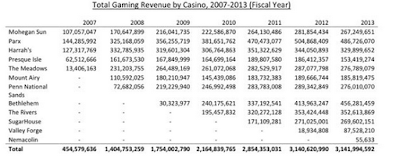
At PTP Downs we'll have a slush fund for instant carryovers. Our broadcasting money will not be spent on concerts, but on dedicated time on a racing channel, with a vibrant betting menu to own a night or day. We'll have some juice that makes sense, not what someone says it should be, based on an arbitrary price-setting mechanism when the only gambling one did was in the back of a pool hall or the racetrack.
Our races will go off at the off time. We'll sell our signal for a blended takeout rate fee, not in the archaic way they are sold now. When a favorite loses by racing poorly, we'll use that slot money for an on-course reporter that asks the loser why, in the same verve he or she chases the winner for a quote. We'll spend $129 for a set of cameras with sound in the stewards room when on-track infractions are being discussed, and broadcast it on the track feed.
We'll spend $145,000 a year for a Vice President of Wagering, with a bonus based on handle growth. In fact, when handle grows it's a profit sharing plan right into everyone's paychecks, from purses, to the person cleaning the toilets. Handle is PTP Downs' number one key performance indicator.
Floppy hat day is fine, as long as we run a handicapping contest live money day, too. Our contest won't have a 30% takeout, because we want to cultivate the game, not send people away. After all, we've got $248 million in slot revenue to play with.
PTP Downs is open for business giving you the best in gambletainment. That's what ends up paying the bills when the slots money dries up.
I don't for a second begrudge Dubai and the Dubai World Cup for their luring of Janet Jackson with mega bucks. The DWC is an event that depends solely on oil money, not betting. It's what they do.
In North America, with the same black gold flowing by way of spinning cherries, charging 27% exotic takeout on the DWC card, while trying to think of ways to use that dwindling revenue on concerts or hat day, strikes me as giving up. Don't give up. This is the greatest gambling game ever invented. Embrace that fact and let's roll.
Have a nice afternoon everyone.
I noticed that the head prince of Dubai, or someone like him, announced that Janet Jackson (Miss Jackson if you're nasty) will be playing, or dancing, or singing ,or what have you, after the Dubai World Cup card.
Janet Jackson said: “I am excited to perform for the global audience at this year's Dubai World Cup. The entire Unbreakable company is looking forward to traveling with me to Dubai and being part of one of the world's most prestigious events.”With a ten million dollar purse, and Janet, I can only conclude that the recent reduction in price of Brent Crude is not overly affecting that part of the world.
This announcement is fresh off the heels of Daughtry being added to the Belmont Stakes day card, which too seems to have a little cash from the slot machines to pay some acts.
At PTP Downs we might have slots like they do below in Pennsylvania, but the cash used from them will not go to concerts - well, maybe we'd set aside a few bucks for a Nickelback cover band - I think they'd go into the product. And I don't mean every last dime into purses.
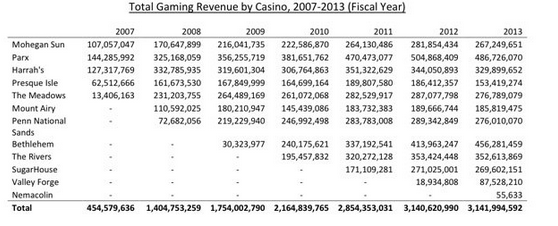
At PTP Downs we'll have a slush fund for instant carryovers. Our broadcasting money will not be spent on concerts, but on dedicated time on a racing channel, with a vibrant betting menu to own a night or day. We'll have some juice that makes sense, not what someone says it should be, based on an arbitrary price-setting mechanism when the only gambling one did was in the back of a pool hall or the racetrack.
Our races will go off at the off time. We'll sell our signal for a blended takeout rate fee, not in the archaic way they are sold now. When a favorite loses by racing poorly, we'll use that slot money for an on-course reporter that asks the loser why, in the same verve he or she chases the winner for a quote. We'll spend $129 for a set of cameras with sound in the stewards room when on-track infractions are being discussed, and broadcast it on the track feed.
We'll spend $145,000 a year for a Vice President of Wagering, with a bonus based on handle growth. In fact, when handle grows it's a profit sharing plan right into everyone's paychecks, from purses, to the person cleaning the toilets. Handle is PTP Downs' number one key performance indicator.
Floppy hat day is fine, as long as we run a handicapping contest live money day, too. Our contest won't have a 30% takeout, because we want to cultivate the game, not send people away. After all, we've got $248 million in slot revenue to play with.
PTP Downs is open for business giving you the best in gambletainment. That's what ends up paying the bills when the slots money dries up.
I don't for a second begrudge Dubai and the Dubai World Cup for their luring of Janet Jackson with mega bucks. The DWC is an event that depends solely on oil money, not betting. It's what they do.
In North America, with the same black gold flowing by way of spinning cherries, charging 27% exotic takeout on the DWC card, while trying to think of ways to use that dwindling revenue on concerts or hat day, strikes me as giving up. Don't give up. This is the greatest gambling game ever invented. Embrace that fact and let's roll.
Have a nice afternoon everyone.
Tuesday, February 23, 2016
"Ok, But What Are They Going to Think?"; Facebook, Others Try. Racing Needs to
Good day race fans!
Yesterday's pop quiz generated a little bit of discussion; mainly regarding the Gulfstream Park Super High 5 which did not have a winner - because only four horses finished and it was impossible to have a winner - that carried over to the next race.
There was the customer point of view (it's silly and unfair), versus the racetrack/insiders point of view (it's a rule!).
The point being made with the quiz, and in other facets of this blog, is that the relevant part of these things is that someone, somewhere makes a policy, or creates a rule, that never asks "what are our customers going to think about this?", before implementing it.
This is not only a racing phenomenon, it's seen in a lot of places.
Here's a machine for a multi-million dollar laser, used in heavy manufacturing (courtesy, this is broken, a TED talk).

For anyone who ever worked in a plant or mill, this is a common sight. The buttons that are used all day are smudged, and there are dozens of unused buttons. The person who designed this machine is probably a very smart engineer with good intentions, but he or she never used this machine. If they did, the smudged buttons would've been bigger, and/or half the buttons eliminated.
Companies often do not have a proper buffer, or second set of eyes, which is end-user or customer related.
In racing this problem is enhanced because the business is about horse lovers, and investment in farms and hay trucks, and bloodstock prices and just about everything else. The people making betting policy are (in large part) from a different, non-end demand area of the sport.
"Yeah, but what is a customer going to think?" They just don't know, because they aren't every day customers.
Many companies counter this strategically, in design, end use, product testing and other ways. It's a vital part of a firm's growth.
Facebook is doing fairly well, of course, but to grow they are going to need to get more people in emerging markets to join their platform. The issue, is that unlike in Canada and the US where broadband and wireless speeds are lightning fast, in many parts of the world they are not.
Enter 2G Tuesday's. Each Tuesday for an hour or so, Facebook engineers and employees will create profiles, upload pictures and be a general user of the platform they work with each day, all in molasses 2G.
It's not up to customers in low-speed countries to dial up Mark Zuckerberg and tell him their platform is too data rich. It's a part of Facebook's structure to figure out what the concerns are before they launch.
When Woodbine is negotiating deals with governments and horsemen for a share of takeout to go to purses, they have to ask "what will this do to our customers when we have to payout lower prices on some tracks?" Let's think about this for a moment and come up with a better way.
Gulfstream has to ask, "what will our customers feel if we have a bet with five horses needed and only four finish?" Let's analyze this for a second here.
When racing starts asking themselves those questions before implementing policy, customer retention will be in a much better place.
Yesterday's pop quiz generated a little bit of discussion; mainly regarding the Gulfstream Park Super High 5 which did not have a winner - because only four horses finished and it was impossible to have a winner - that carried over to the next race.
There was the customer point of view (it's silly and unfair), versus the racetrack/insiders point of view (it's a rule!).
The point being made with the quiz, and in other facets of this blog, is that the relevant part of these things is that someone, somewhere makes a policy, or creates a rule, that never asks "what are our customers going to think about this?", before implementing it.
This is not only a racing phenomenon, it's seen in a lot of places.
Here's a machine for a multi-million dollar laser, used in heavy manufacturing (courtesy, this is broken, a TED talk).

For anyone who ever worked in a plant or mill, this is a common sight. The buttons that are used all day are smudged, and there are dozens of unused buttons. The person who designed this machine is probably a very smart engineer with good intentions, but he or she never used this machine. If they did, the smudged buttons would've been bigger, and/or half the buttons eliminated.
Companies often do not have a proper buffer, or second set of eyes, which is end-user or customer related.
In racing this problem is enhanced because the business is about horse lovers, and investment in farms and hay trucks, and bloodstock prices and just about everything else. The people making betting policy are (in large part) from a different, non-end demand area of the sport.
"Yeah, but what is a customer going to think?" They just don't know, because they aren't every day customers.
Many companies counter this strategically, in design, end use, product testing and other ways. It's a vital part of a firm's growth.
Facebook is doing fairly well, of course, but to grow they are going to need to get more people in emerging markets to join their platform. The issue, is that unlike in Canada and the US where broadband and wireless speeds are lightning fast, in many parts of the world they are not.
Enter 2G Tuesday's. Each Tuesday for an hour or so, Facebook engineers and employees will create profiles, upload pictures and be a general user of the platform they work with each day, all in molasses 2G.
The initiative is designed to help employees empathize with users in booming markets like India, Thailand, and much of Latin America, but also to help them work out what they could improve about the app to make it more usable on slower connections. "They're going to see the places that we need to improve our product," Alison said
 |
| This sign maker never had a roadside emergency |
When Woodbine is negotiating deals with governments and horsemen for a share of takeout to go to purses, they have to ask "what will this do to our customers when we have to payout lower prices on some tracks?" Let's think about this for a moment and come up with a better way.
Gulfstream has to ask, "what will our customers feel if we have a bet with five horses needed and only four finish?" Let's analyze this for a second here.
When racing starts asking themselves those questions before implementing policy, customer retention will be in a much better place.
Subscribe to:
Posts (Atom)
Most Trafficked, Last 12 Months
-
Standardbred Canada has a poll up asking who is the greatest trotter who ever lived. These questions are fun, but really it is impossible t...
-
There has been a lot of discussion of late via #simocon about racing, betting and signals and all the rest. The main theme is that racing ca...
-
On the Harness Edge this morning, I see that there is a story up about the BCSA offering their members up for driver and trainer interviews ...
-
Good morning everyone. I hope the day is treating you well. So much happened this weekend, and much of it stuck in my craw (or in my amazem...
-
 2024 marked the first year ever that Woodbine Entertainment did not put out a year end press release detailing their annual and year over y...
 -
I spent a couple of hours the past few days listening to the Bet With the Best podcast with guest Marshall Gramm. In my view, it is one o...
-
I'm always looking for new ideas or mediums to learn in the game (in that evergreen quest to get better) and I'd been meaning to div...
-
We've all seen public money dry up over the years in all of racing, where the sharp money seems to know. We've also seen (for not on...
-
 Sinking marketing money directly into the horseplayer by seeding pools is effective, in both theory and practice In Ontario and elsewher...
